Date: January 6, 2026
Generative AI hasn’t just picked up speed; it’s already changed the way businesses work. By 2025, you found GenAI almost everywhere: creating content, helping customers, crunching numbers, and automating routine tasks. But 2026 is different. That’s when companies stop treating GenAI as a side project and start weaving it right into the heart of how they run, compete, and grow. The question won’t be, “Should we use GenAI?” It’ll be, “Are we using it well enough, everywhere it matters?”
As companies get more comfortable with AI, some new patterns are starting to show up, ones that’ll define what comes next. The big themes? Trust, control, scale, and making a real impact, especially in fields where mistakes are expensive or lives are on the line: healthcare, finance, manufacturing, energy, and government.
1. AI Goes From Add-On to Built-In
By 2026, GenAI won’t feel like an extra tool you open when you need it. It’ll be baked right into the apps and systems people use every day—ERP, CRM, EHR, GIS, dashboards, you name it. Those AI copilots you’ve heard about? They’ll just be part of the furniture, helping out automatically, no extra effort required.
AI will fade into the background, but you’ll notice the difference. People won’t think, “I’m using AI.” They’ll just work faster, make fewer mistakes, and spend less time on boring stuff. The proof? Time saved, better decisions, and fewer headaches—not just more stuff generated.
2. Context Is King
Early GenAI was impressive, but let’s be honest—it often missed the mark because it didn’t “get” your business. Generic models, no matter how powerful, can’t really understand your workflows, your rules, or your industry quirks. By 2026, that changes.
The best GenAI systems will blend LLMs with company knowledge, old data, live updates, and clear business rules. That means the AI knows who you are, what you’re working on, and what matters most right now. This kind of smart context makes all the difference, especially where accuracy and trust are non-negotiable.
3. Agentic AI Takes the Wheel
Here’s where things get interesting. 2026 brings agentic AI—think AI that doesn’t just answer questions, but actually plans, executes, and adapts on its own. These agents don’t just follow scripts; they handle curveballs, work with other agents, and know when to loop a human in.
In practice, this means GenAI will tackle jobs like processing insurance claims from start to finish, handling incidents, checking compliance, running procurement, and keeping an eye on infrastructure. People will spend less time on grunt work and more time guiding and improving what AI does. Productivity jumps, but humans stay in charge where it counts.
4. GenAI as the Glue, Not the Bulldozer
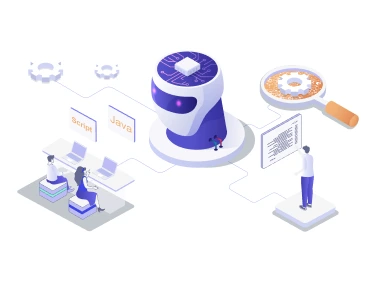
Companies have learned the hard way that ripping out old systems is expensive and full of risk. So, in 2026, GenAI shows up as a smart automation layer. It sits on top of what’s already there, stitching together workflows, pulling insights from messy data, and automating decisions—without breaking what works.
This approach isn’t about replacing everything. It’s about making what you have smarter, faster, and easier to use. Adoption gets smoother, and you see results sooner.
5. Trust and Transparency Matter More Than Ever
As GenAI gets embedded in the real guts of a business, people get (rightfully) picky about trust. By 2026, nobody’s rolling out AI without strong governance. Companies demand clear explanations, audit logs, and tight access controls.
It’s not just about how well a model works—it’s about understanding why it does what it does, what data it uses, and how it handles risk. Regulators step in, too, pushing companies to bake responsible AI into their systems from day one, not as an afterthought.
6. Industry-Tuned AI Wins
Generic models keep getting better, but the real value in 2026 comes from industry-specific GenAI. These models learn from the details: clinical guides in healthcare, engineering standards, financial rules, legal codes, geospatial info—stuff you won’t find in general datasets.
Bottom line: GenAI is no longer a shiny new gadget. It’s becoming the backbone of how organizations operate, and the companies that figure out how to integrate, trust, and specialize their AI will pull ahead of the pack.
AI in healthcare will speak the language of doctors, nurses, and hospital systems. In manufacturing, AI won’t just crunch numbers. it’ll actually make sense of sensor data and maintenance logs. Over in the public sector, AI will stick closely to government rules and protocols for serving citizens. This level of specialization really cuts down on AI “hallucinations” and makes these tools a much better fit for tightly regulated industries.
7. Multimodal AI Becomes Enterprise-Ready
Multimodal AI is about to get real for the enterprise. By 2026, generative AI won’t be stuck in the world of text. We’re talking about AI that can handle words, images, video, audio, sensor readings, even maps and geospatial info—all at once. That opens the door for things like smarter surveillance, better remote inspections, diagnostics from a distance, infrastructure monitoring, and more responsive citizen services.
Imagine this: AI systems analyzing satellite images, drone video, IoT sensor data, and written reports together, then serving up insights you couldn’t get from any one source alone. Companies working out in the real world—construction, logistics, utilities—will see huge gains as digital intelligence and physical operations finally meet.
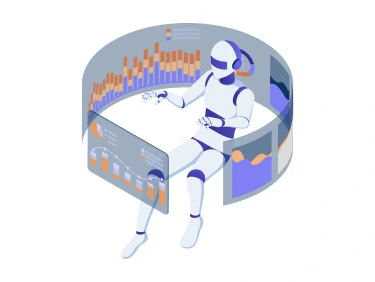
8. AI-Powered Decision Intelligence Replaces Static Dashboards
The old dashboards just told you what happened. By 2026, that’s not enough. GenAI-powered systems will dig into why things happened and, more importantly, what you should do next. Instead of staring at static KPIs, leaders will get real-time recommendations and explanations from AI-driven decision platforms.
These platforms won’t just report—they’ll spot trends, predict what’s coming, simulate different scenarios, and suggest actions, all on the fly. Leaders can finally shift from reacting late to steering the ship ahead of time, backed by AI that actually gets the business.
9. Human-in-the-Loop Remains Critical
Even as AI gets smarter and more independent, people won’t be sidelined. Human-in-the-loop setups will be the norm, especially where the stakes are high. People will double-check AI results, handle weird exceptions, and give feedback to keep the models sharp.
This kind of teamwork is how you keep things accountable and safe, while still scaling up with AI. The most successful organizations will be the ones that build AI around the way humans work, not the other way around.
10. Competitive Advantage Shifts to AI Operating Models
In 2026, just having GenAI won’t set you apart anymore. The real edge will come from how you run AI day-to-day, how ready your data is, how solid your governance is, how well you manage change, and how deeply you weave AI into your operations.
The winners will treat GenAI as a core operating system, not a science fair project. These are the companies that’ll pull ahead in speed, resilience, and new ideas. In other words, real AI maturity is what’ll separate the leaders from the rest.
Conclusion: Preparing for the GenAI-First Enterprise
Looking ahead to 2026, generative AI will be sharper, more aware of its context, more independent, and more accountable. It’s set to reshape how businesses get things done, make decisions, and serve their customers. But here’s the thing—success won’t come from just grabbing the latest shiny model. It’ll come from building AI that’s scalable, responsible, and actually fits the business.
The organizations that start now, investing in strong data, trustworthy AI frameworks, and layers of smart automation will be the ones out in front when the GenAI-first era arrives. The future goes to the enterprises that stop dabbling and make generative AI a core part of their DNA.
Tags
ai
Gen AI
genai
Related Blogs



August 21, 2025
June 10, 2025